Shift planning that fills the gap — not just flags it.
Every Swiss hospital plans shifts in a system that says who is missing. None has a system that says who could step in.

One call-off at 06:40 costs 47 minutes and four phone calls.
Not because the planner is bad at her job, but because her system cannot answer the question «who can step in today» at all. It knows the roster as planned. It does not know the people in it.
«When a colleague is in edit mode, I cannot get in. I had to ring her and ask her to step out for a moment.»
- 1Find the gap, open the roster sheet4 min
- 2Who has emergency experience?6 min
- 3Schedule a candidate → rest-period error5 min
- 4Next candidate → six-days-running error5 min
- 5Ring 4 people one by one18 min
- 6Write down who said yes and who said no3 min
- 7Update the roster, check the balances6 min
Eine Quellzeile schafft Vertrauen und schützt Sie: «Zeitmessung mit zwei Planenden, Notfall und Bettenstation, Sept. 2026» o. ä.
Four problems every planner knows.
Not a feature list. For each problem the screen that solves it — from the running application, not from a brochure.
| Mo | Tu | We | Th | Fr | Sa | Su | |
|---|---|---|---|---|---|---|---|
| Dario Suter | F | F | M | M | R | R | S |
| Lea Zimmermann | M | M | R | F | R | S | S |
| Robin Gerber | S | R | F | F | R | M | R |
Three nights apart. A year of arguing about it.
An ambulance service compared ten of its staff across a full year: between the person with the most night shifts and the person with the fewest lay three nights. The comparison happens anyway, fresh every month — because nobody can see the number.
A standing request counts once
The weekly training session is one request, not four a month. It has an account of its own.
Trade summer against winter
One weekend fewer in July, one more in January. Whoever skis trades the other way round.
Cover a shift without a phone call
The request goes to everyone allowed to take it. Accepting is voluntary, and everyone sees when enough have.
Leave, before it starts to press
Anyone still holding eight days in November learns that in June — not in November.
Gap between the first and the last person: 3 nights
The bars are accurate. That is how small the difference is.
The numbers on this card are an example. NOM counts them out of the roster itself, from the first pilot month.
The rulebook belongs in the system, not in the margin of the form.
Today it stands beside the form, and whoever gets it wrong is never told: the request is simply not granted, without comment. NOM knows the rules before anything is sent.
Three layers, one catalogue
- The Labour Act and its ordinance, your canton's collective agreement, your own rulebook.
- Every rule names its source: document, clause and date of approval.
- Where two layers disagree, the stricter one applies.
Written down once
- We go through your rulebook with you and write it down as rules.
- Decisions on single cases join the catalogue as rules — with the reason.
- What the system knows about your house grows because it is noted. Not guessed.
Rules carry a date
- When management revises the rulebook, the new version applies from a set date.
- A roster keeps the rules it was built under — years later as well.
- Which version applied is kept with the roster, not in a binder.
Checked as it is typed
- The request is checked while it is being made — not after it has been refused.
- No refusal without a rule. Whatever will not work says why, on submission.
- If there is not enough to go round, the stored order of precedence decides.
No model reads your rulebook and derives rules from it — a refusal has to stand up under employment law. What the initial capture costs: effort and timeline.
NOM comes to you. Your data does not come to us.
Rostering is personnel-data processing at the operational core of a hospital. Which makes the deployment model the first decision rather than a footnote in the contract — and it is decided in your favour.
Your datacentre, or your IT partner
- Delivered as a container package into your virtualisation — or to your IT partner.
- No AWS, Azure or Google service is a prerequisite: one database, one process.
- One tenant per hospital. Never one database with two houses inside it.
Your directory, your policy
- Sign-in through Entra ID or LDAP, two-factor by your rules. No second password.
- Roles per ward: the planner sees her ward, the nurse sees her own roster.
- Support access only at your request, time-limited and logged.
Personnel data, never patient data
- Shifts, qualifications, hour balances. No diagnoses, no case numbers.
- Every change with person, time and reason; published rosters are kept as versions.
- Access and erasure per person are a feature, not a job for the database team.
A name, not a queue
- Three tiers: planning is down, one function is impaired, everything else.
- Security incidents to you at once — with what your report to the BACS needs.
- The published roster stays printable, even when NOM cannot be reached.
The rule first, then the model.
«Who can cover today» is a question NOM answers with rules: rest period, qualification, workload, balance. Every refusal names its reason — the answer has to be defensible under the Labour Act, not merely plausible.
A language model drafts the request, sums up the handover, searches the roster. It does not decide. And it would run dedicated to your house — on your hardware or at your IT partner, with no personnel data leaving for an outside interface.
Who can take the late shift on Sat 17 Oct?
Four are allowed to cover. Two are next by balance:
- CDCéline Dubois−41:55
- LZLea Zimmermann−8:25
The rule makes the choice, not the model.
Draft the requestPro Stufe eine Zahl («S1: 2 h innerhalb der Betriebszeit»), dazu Betriebszeiten und Kanal. Ohne Zahlen ist «Eskalation» nur ein Wort.
Heute hält NOM kein Zertifikat. Entscheiden Sie, was auf die Seite darf: ISO 27001 angestrebt bis «Jahr», Penetrationstest vor Produktivstart, ISDS-Konzept auf Anfrage.
As things stand today NOM is a prototype. What this panel says about operation, access and escalation are the commitments for the production version and the architecture that has to carry them — not certificates we do not yet hold. The Sidekick is a sketch.
Four founders — one for every point where a project like this fails.
Hospital software rarely fails on the technology. It fails at the security audit, on the procurement path, at an interface nobody opens willingly — or at replacing the old system, which never quite finishes. NOM has a founder for each of those.
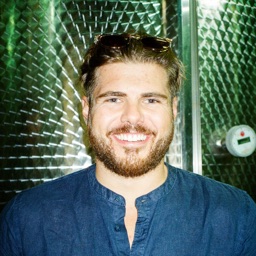 Lead Executive and Vision
Franco Steiner
- Founded NOM and owns what the product is — and what it is not.
- IT, AI and automation. Has replaced whole systems, up to the ERP.
- Runs the conversations with planners and ward leads that become the rules in the product.
 Lead Infrastructure and Data Security
Pankaj Kumar
- Formerly a senior developer at Google.
- Owns everything between the code and your data centre: operations, encryption, backup, sign-in through your directory.
- Answers the questions of your IT's security review.
 Lead Acquisition and Mission
Adrian Oertig
- Project management and acquisition in politics.
- Knows how hospitals and cantons buy: tender, award criteria, contract.
- Represents NOM with associations, health administration and politics.
 Lead User Experience and Marketing
Marc Rubli
- Branding and marketing, with a focus on storytelling.
- Designs the screens: the planning grid, the staff app, this website.
- So that the app is opened because people want to — not because they have to.
The workflows in this product come from conversations with ward leads, nurses and junior doctors — not from a requirements document.
What the room usually asks next.
Data protection is not a section here, it is the first design decision: NOM comes to you, so that your personnel data never leaves your house. Everything else follows from that.
- Is any data sent to an AI model?
- No. Not one byte, to no model, at no provider. None runs in the product today. If one is added, it runs on your hardware — and it is not trained on your data.
- Can you comply with our data protection policy?
- We are subject to it. NOM runs in your datacentre, against your directory, with your roles. Your policy is not a promise from us, it is the environment.
- What does your system learn?
- Rules, not people. Your rulebook, and every single case meant to become a rule. No behaviour, no profile of any member of staff.
- What do support and incident handling look like?
- Three tiers, and a name instead of a queue. Access to your system only when you ask for it, time-limited and logged — never in the background.
- Why are you quicker to ship new features?
- One product, one codebase, no twenty years of legacy. The drawback comes with it: we are small. Hold us to that as well.
- Do you offer training for staff?
- For the planners, yes: scope and format. For everyone else the aim is that none is needed.
Twenty minutes, one roster sheet, your numbers.
No slide deck. We load one month of your ward into the demo, and you see on your own roster what stands out.
Kalender-Link, Formular oder E-Mail? Bei einem Formular: welche Felder — und wer bekommt die Anfrage?